
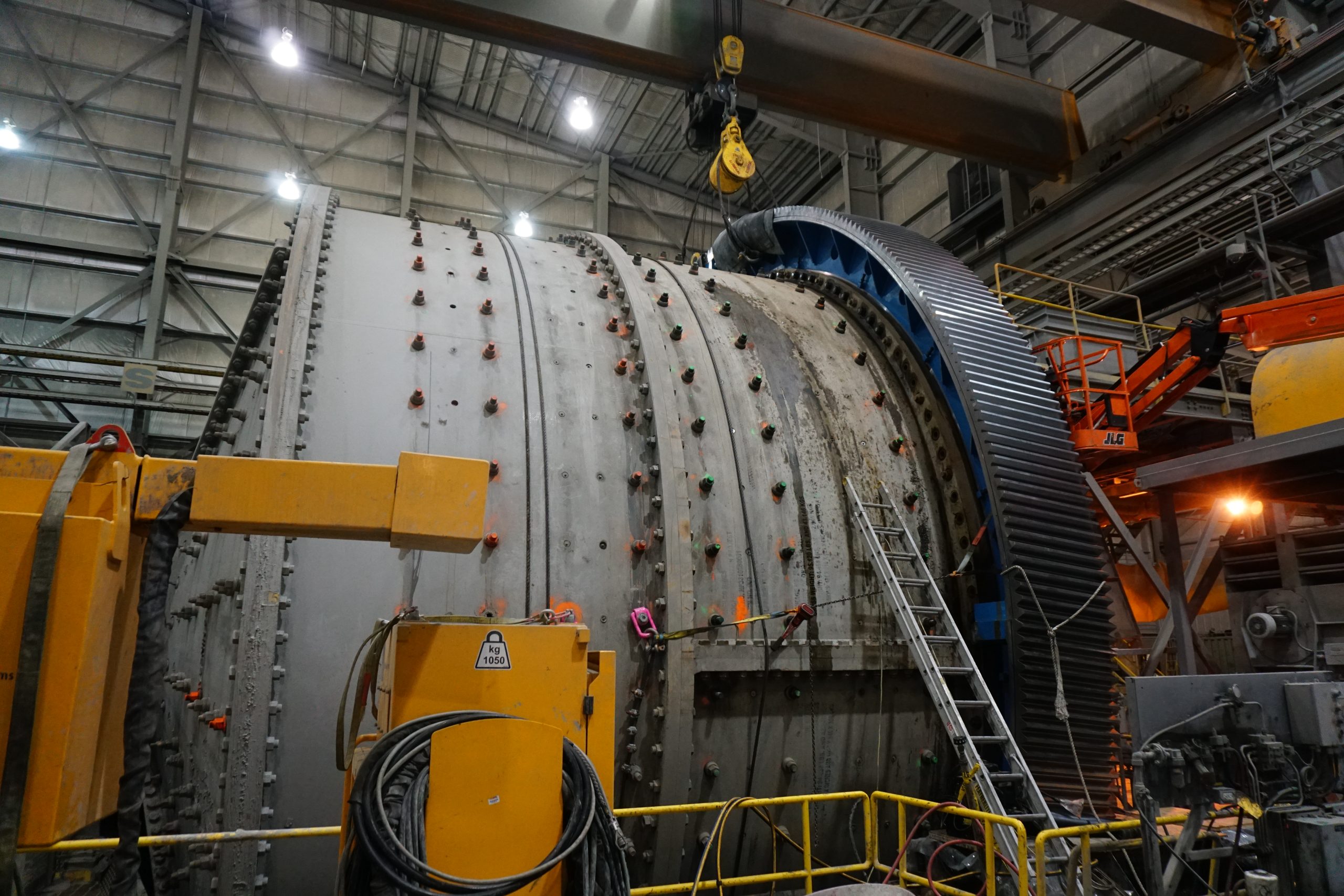
Open Gear Maintenance for Mills, Kilns and Rotary Equipment
Large open gears used in grinding mills, kilns and other rotating equipment operate under extremely demanding conditions.
Dust, fines, slurry, moisture and degraded lubricant continuously enter the gear mesh. Over time this contamination affects lubrication performance, gear tooth condition and inspection accuracy.
Effective open gear maintenance requires more than lubrication alone. It requires controlling contamination, maintaining inspection-ready gear surfaces and identifying potential failure modes early.
Cleansolv™ cleaning solutions help maintenance teams manage contamination and maintain gear reliability without extended downtime.
Learn how proper girth gear cleaning supports maintenance programs: https://clean-solv.com/girth-gear-cleaning/
The Real Drivers of Mill Gear Reliability
Most girth gear failures can be traced to a small number of root causes:
• contamination
• lubrication practices
• alignment issues
• delayed inspections
Among these factors, contamination is often the most underestimated.
Contaminated lubrication gradually degrades tooth surfaces, increases vibration and reduces the effectiveness of condition monitoring programs.
Learn how contamination develops: https://clean-solv.com/gear-contamination/
Why Gear Cleaning Is Part of Preventative Maintenance
In many maintenance programs, cleaning is treated as a one-time shutdown activity.
However, contamination begins accumulating again immediately after the gear returns to service.
Integrating regular gear cleaning into preventative maintenance routines allows operators to:
• control contamination levels
• maintain consistent lubrication conditions
• identify developing failure modes earlier
• prevent hardened root buildup
Cleaning is often performed before scheduled maintenance shutdowns so inspectors can evaluate gear condition without delays.
Inspection preparation details: https://clean-solv.com/gear-inspection-preparation/
Why Cleaning Time Affects Shutdown Planning
One of the most underestimated factors in shutdown planning is gear cleaning time.
Inspection cannot begin until contamination has been removed from the gear teeth.
At many sites this process can take several hours due to:
• compacted lubricant contamination
• high viscosity gear lubricants
• hardened deposits in tooth roots
• manual cleaning methods
When cleaning takes longer than expected, inspection schedules are pushed back and shutdown duration increases.
Modern gear cleaning solutions allow contamination to be removed much faster, helping maintenance teams maintain predictable schedules.
Improving Maintenance Consistency
Reliable open gear maintenance programs depend on consistency.
When gears are cleaned and inspected regularly, maintenance teams gain several advantages:
Better Condition Monitoring
Clean gear teeth expose surface conditions, allowing inspectors to identify micropitting, scuffing and wear patterns earlier.
Reliable Inspection Data
Consistent surface conditions allow inspection results to be compared over time.
Reduced Failure Risk
Early detection of abnormal wear patterns allows corrective action before major damage develops.
Cleaning Products for Open Gear Maintenance
Cleansolv™ products are designed specifically for cleaning large open gears used in mining and industrial processing equipment.
Recommended solutions include:
Cleansolv EHF
Designed for pre-inspection cleaning and maintenance procedures.
https://clean-solv.com/product/cleansolv-ehf/
Cleansolv HF EP
High-performance open gear cleaning solution for mills and kilns.
https://clean-solv.com/product/cleansolv-hf-ep/
Cleansolv GF 460EP
Rapid flushing solution for SAG mill gears.
https://clean-solv.com/product/cleansolv-gf-460ep/
Automated Gear Flushing System
Portable equipment for controlled gear flushing operations.
https://clean-solv.com/product/automated-gear-flushing-system/
A Modern Approach to Open Gear Maintenance
Historically, contamination was accepted as an unavoidable part of open gear operation.
Today, operators are taking a different approach.
By controlling contamination, cleaning gears regularly and preparing gears properly for inspection, maintenance teams can:
• improve gear reliability
• reduce unplanned downtime
• extend equipment life
• improve inspection accuracy
The result is a more predictable maintenance program and better long-term performance from critical mill drive systems.