
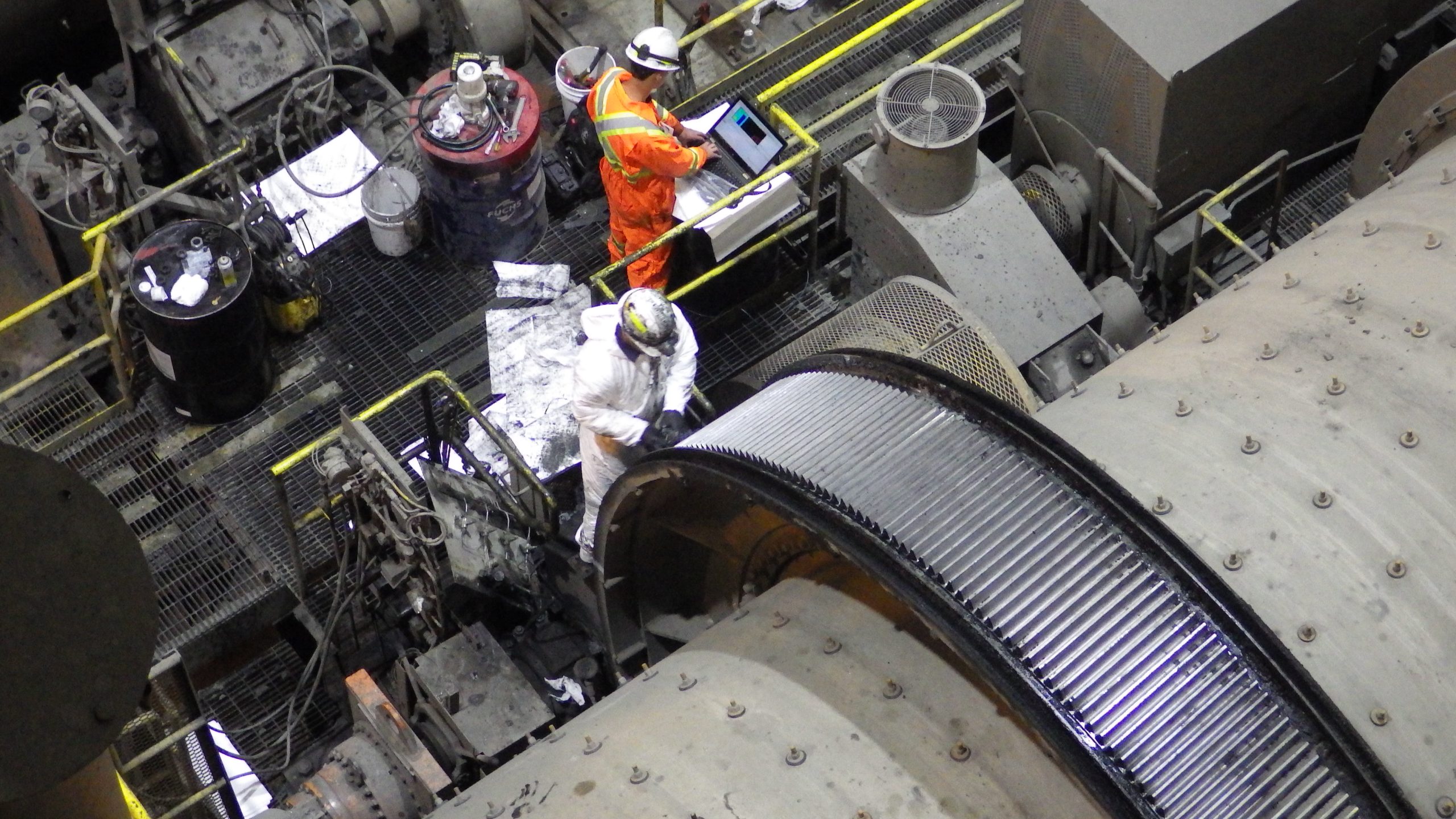
Preparing Girth Gears for Inspection
Girth gear inspections depend on clean gear teeth.
Contaminated lubricant, dust and wear debris mask the true condition of gear tooth surfaces and introduce uncertainty into inspection results.
Without proper cleaning, inspections cannot be reliably repeated or trended.
This is why gear cleaning is integrated into ASTM E2905 inspection procedures.
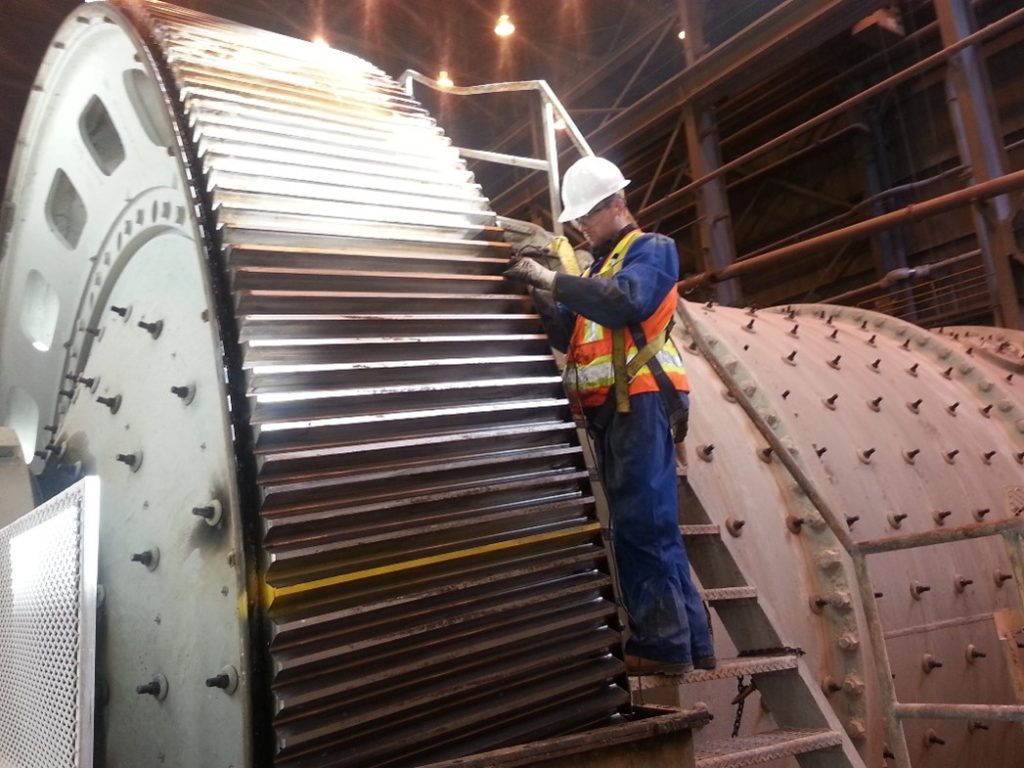
Why Cleaning Is Required for Gear Inspections
The primary objective of gear cleaning is to remove contaminated lubricant that interferes with inspection measurements.
Residual lubricant and debris change probe contact conditions and measurement consistency.
This results in:
• inconsistent inspection data
• reduced inspection sensitivity
• inability to compare inspection results over time
Cleaning establishes a consistent inspection surface so measurements are repeatable and defensible.
Learn more about cleaning practices: https://clean-solv.com/girth-gear-cleaning/
ASTM E2905 Eddy Current Array Inspections
ASTM E2905 Eddy Current Array (ECA) inspections were developed specifically for mill and kiln girth gears.
The method provides:
• full inspection coverage of gear tooth surfaces
• objective inspection data
• repeatable results between inspections
However, inspection sensitivity depends on probe lift-off.
Contamination and residual lubricant increase lift-off and weaken eddy current coupling, reducing signal strength.
Proper gear cleaning restores probe coupling and ensures anomalies are not missed.
What Contamination Can Hide
Dirty gear teeth can mask critical surface conditions including:
• early micropitting
• surface distress
• scuffing and adhesive wear
• cracking in tooth roots
• abnormal contact patterns
Inspection quality begins with surface condition.
A dirty gear is not an inspectable gear.
Inspection Methods and Cleaning Requirements
Different inspection methods require different levels of surface preparation.
Eddy Current Array (ASTM E2905)
Cleaning required. Complete removal of residual film not required.
Magnetic Particle Inspection
Cleaning required. Surface must be wiped completely dry.
Liquid Penetrant Inspection
Cleaning required. Surface must be fully clean.
Ultrasonics
Cleaning required but method evaluates subsurface conditions.
Understanding these requirements ensures inspection results are valid.
Low-Risk Cleaning Practices
When performed correctly, gear cleaning is a controlled inspection-enabling process.
Typical conditions include:
• cleaning during grind-out under reduced load
• temporary boundary protection maintained during cleaning
• normal operating temperature
• complete containment of spent fluids
Recommended solutions:
Cleansolv EHF: https://clean-solv.com/product/cleansolv-ehf/
Cleansolv HF EP: https://clean-solv.com/product/cleansolv-hf-ep/