
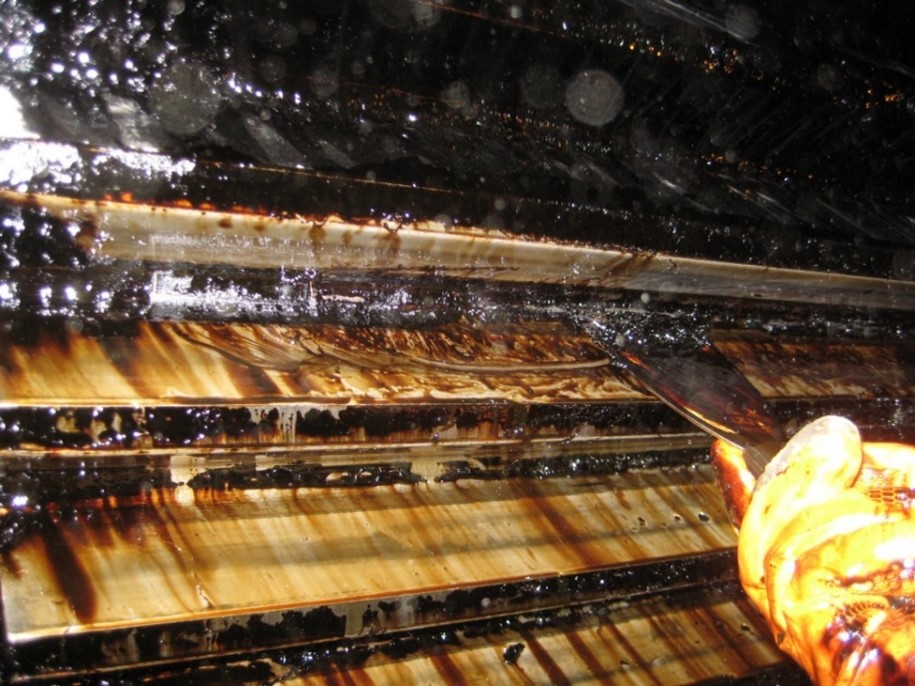
Gear Contamination in Open Gears
Most girth gear and pinion failures trace back to a few root causes:
• contamination
• lubrication practices
• alignment
Among these, contamination is the quiet threat.
Unlike lubrication failures, which appear quickly, contamination builds slowly over time. It gradually degrades lubrication performance and gear tooth surfaces long before obvious symptoms appear.
Left unmanaged, contamination steadily erodes reliability.
Learn how proper cleaning addresses this issue: https://clean-solv.com/girth-gear-cleaning/
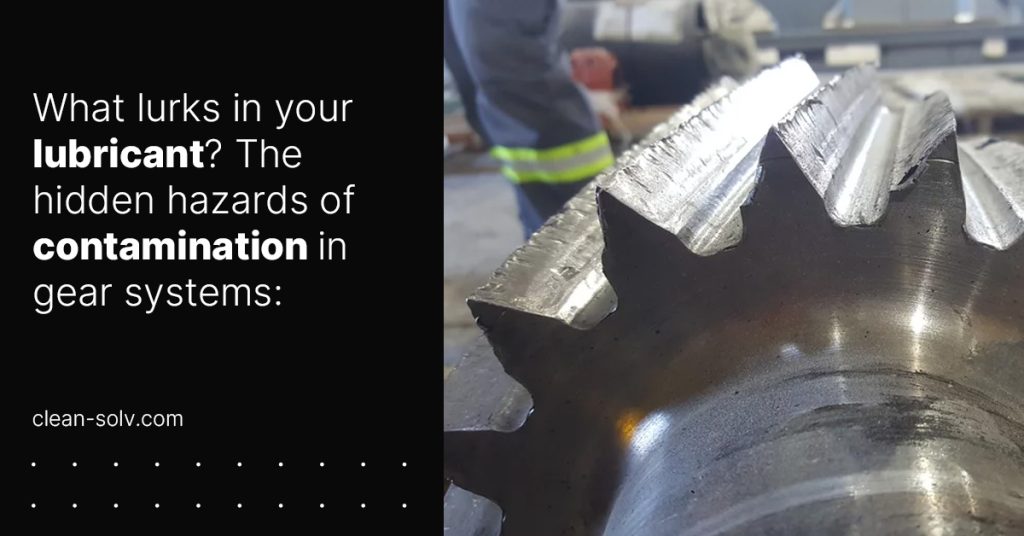
How Contamination Enters Open Gears
Open gear systems operate in environments where contamination is unavoidable.
Typical contamination sources include:
• airborne dust and fines
• slurry and process materials
• degraded lubricant
• moisture infiltration
• wear debris from gear contact
As the gear rotates, this material becomes suspended in the lubricant and trapped between gear teeth.
Over time it accumulates in tooth roots and flank surfaces.
Abrasive Wear: The Silent Erosion of Gear Life
Fine particulate contamination suspended in lubricant behaves like grinding compound.
Under load this material removes microscopic layers of metal from gear tooth flanks.
The result is:
• degraded surface finish
• reduced load-carrying capacity
• accelerated gear wear
Once abrasive wear begins, damage progresses rapidly during normal operation.
Other Effects of Gear Contamination
Contamination also causes several additional reliability problems.
Excessive Vibration
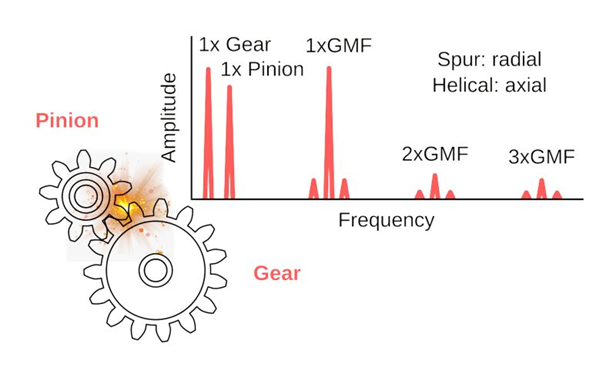
Uneven tooth contact caused by contamination increases dynamic loading and vibration.
Corrosion
Moisture contamination can produce corrosion pits that weaken gear surfaces.
Improper Meshing
Buildup in tooth roots interferes with correct pinion engagement.
Inspection Distortion
Contaminated gear teeth mask wear patterns and failure indicators.
For inspection implications see: https://clean-solv.com/gear-inspection-preparation/
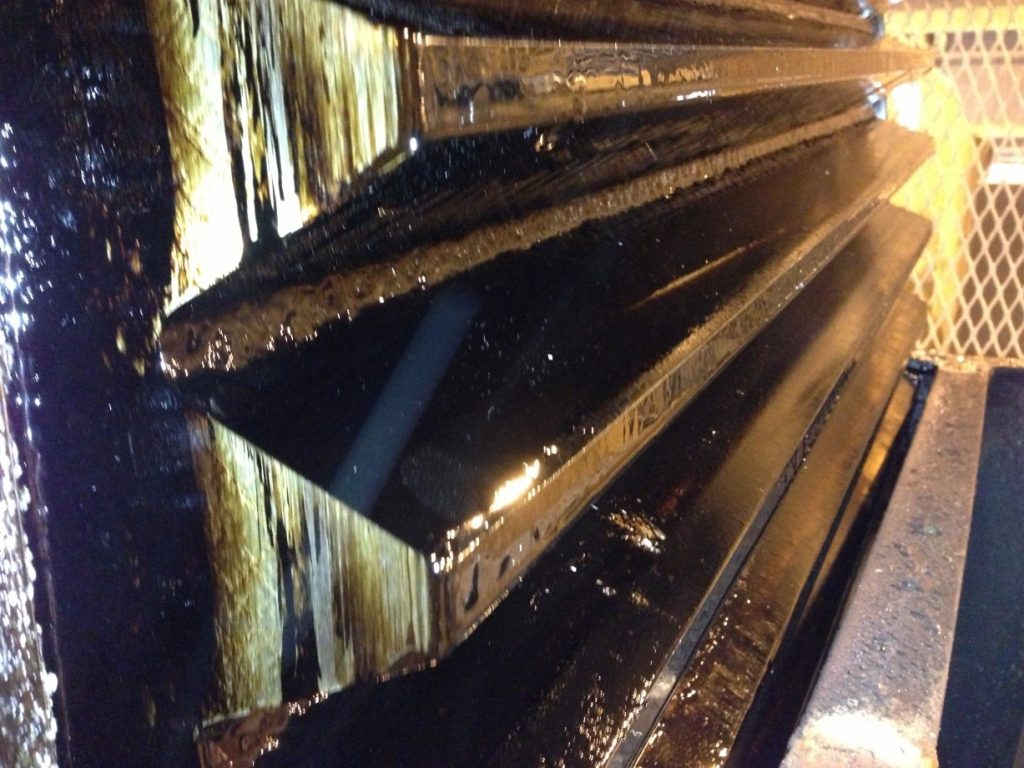
Why Tooth Roots “Cake Up”
With asphaltic-based gear lubricants, a carrier solvent helps distribute lubricant onto the gear.
Once the gear reaches operating temperature the solvent evaporates, leaving behind a high-viscosity lubricating film.
Dust and fines become embedded in this lubricant and are compacted into the tooth root by gear meshing forces.
Over time this material forms hardened deposits that are extremely difficult to remove.
Regular cleaning prevents this buildup and preserves proper gear function.
Contamination Control Strategies
Effective contamination control includes:
• regular gear cleaning
• proper lubrication practices
• maintaining gear guards
• periodic inspection
Modern cleaning solutions allow contamination to be removed efficiently without increasing operational risk.
Recommended products: